Origin
Five Indian coffee states, each with its own altitude, varieties and character.
Roastery & export house
We source, roast and prepare Indian coffee for importers, roasters and brands worldwide.
Scroll to follow the coffee cherry
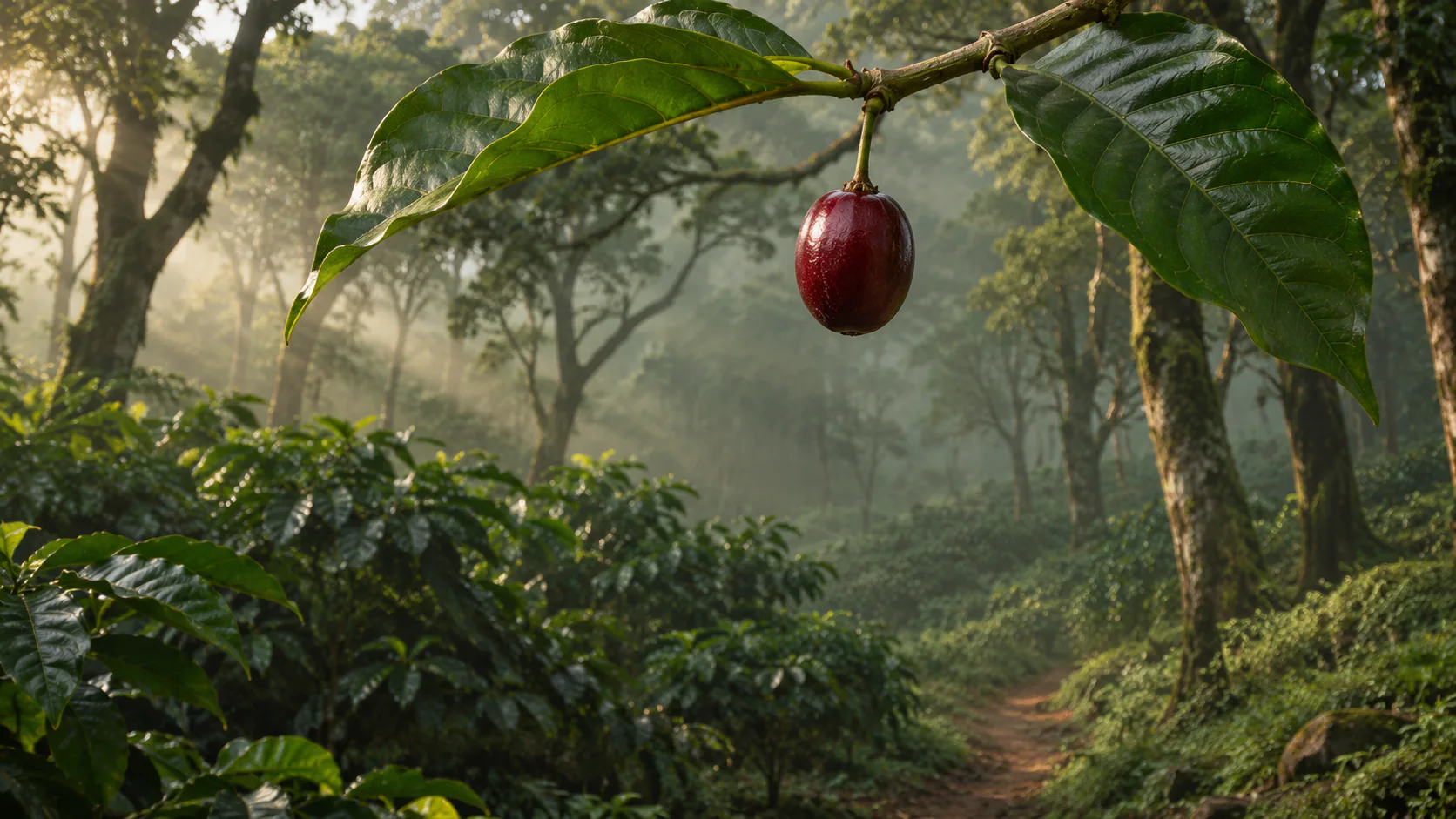
Before coffee is a bean, it is a cherry on a tree.
Ripe cherries are selected for processing. Careful picking and sorting help keep immature and damaged fruit out of the lot.
Ripe cherries dry whole around their seeds. During dry milling, the brittle fruit covering breaks away and reveals the beans inside.
Dried inside the cherry
Pulping removes the cherry’s skin and flesh. Some or all of the sticky mucilage remains around the parchment-covered beans as they dry.
Dried with mucilage intact
After pulping, water rinses away loosened mucilage, which can also be removed mechanically. The clean beans then dry inside their parchment.
Washed first, then dried in parchment
A huller cracks the firm, dried parchment around each bean to release the green coffee. For natural coffees, dry milling also removes the dried fruit.
Green beans are sorted and graded for size and defects, then evaluated against the buyer’s agreed specification.
Controlled heat develops the bean’s colour, aroma and flavour. Time and temperature are adjusted to the intended roast profile.
Roasted coffee is ground to the particle size the brewing method needs.
Green beans can be traded, roasted whole or ground for filter coffee.
Select a range to compare grades, blends and order terms.

Washed and unwashed lots for domestic supply and export.
Explore green coffee
Whole beans for cafés, retailers and private labels.
Explore roasted coffee
Pure coffee and coffee–chicory blends for filter brewing.
Explore filter coffeeExplore grades, available origins and detailed product specifications. See minimum order quantities on each product page and request a quotation for your destination.
Filter coffee prepared with lion’s mane, shilajit, sea moss or ashwagandha. Ask for the complete ingredient declaration on any of these.
Lot specifications, availability and pricing are confirmed with your quotation. Request a representative sample to evaluate your selected lot.
Tell us where the coffee is going and how you plan to use it. We’ll confirm a suitable lot, its specification and price.
Five Indian coffee states, each with its own altitude, varieties and character.
Species, form, grade and processing — tell us what you know and leave the rest open.
We confirm availability, lot specification, packaging and an export quotation.

Stephen Blake is an Indian coffee roastery, manufacturer, trading house and private-label partner. We bring sourcing, roasting and product development together to help businesses create coffee with a clear identity and a defined purpose.
Exceptional coffee begins long before the roast. It starts with the growing region, variety, harvest and processing decisions that give every lot its character. Our work connects those origins with the requirements of your business and market.
What coffee are you trying to create?
A single origin can lead to many different coffees. We help make the choices that turn its potential into a product suited to your customers, brewing method and market.
We work with Arabica and Robusta from Indian growing regions including Kodagu, Wayanad and Araku Valley. Climate, variety and post-harvest handling shape each coffee differently, so selection begins with the qualities a buyer needs: body, aroma, acidity, sweetness or performance within a blend.
Our portfolio includes commercial and premium grades, supplied as green coffee or developed through roasting, blending, grinding and packaging. Origin and processing are part of the product specification, not simply a name on the bag.
Bring an established specification or develop one with us. We consider origin, variety, grade, processing, Arabica–Robusta ratio, roast profile and grind against the intended brewing application and price position.
From roasted whole beans and ground coffee to traditional filter blends, the aim is a product that performs in everyday use. Samples turn a flavour brief into something your team can evaluate before agreeing a production specification.
We support businesses building their own coffee range, from the first concept through sourcing, blend development, roasting, grinding and packaging. Your identity leads the finished product; the coffee inside is developed around your requirements.
Support can also include logo and label development, packaging design, trademark coordination and marketing assistance. The scope, quantities and production schedule are agreed around each project.
Quality depends on the complete chain: sourcing, storage, roast development, blending, grinding and final packing. Each stage influences how the coffee reaches the buyer and how it performs when brewed.
Packaging is selected for the product, supply route and customer requirement. Options include nitrogen-flushed packs and formats for branded ranges, wholesale and bulk supply. Pack material, weight and handling requirements are reviewed together.
Alongside green, roasted and filter coffee, our product-development work explores specialty formulations, functional coffee concepts, cold brew and instant coffee. New formats begin with the same question as a traditional blend: what should this product do for the customer?
Research and development help us assess ideas thoughtfully. Each new formulation is considered on its own merits, with feasibility and supply requirements established before a commercial programme is agreed.
We work with cafés, retailers, independent brands, wholesalers, roasters and international buyers. A supply conversation begins with origin, grade, processing, quantity, packaging and destination, then moves towards the right sample and quotation.
Whether the requirement is a developing brand or an established bulk programme, our role is to connect Indian coffee origins with a practical, clearly specified product for your business.
Great coffee is the result of many small decisions made well. Where it grows. How it is processed, roasted, blended and packed. We bring those decisions together, respecting where coffee comes from while exploring where it can go next.
Tell us what you want to create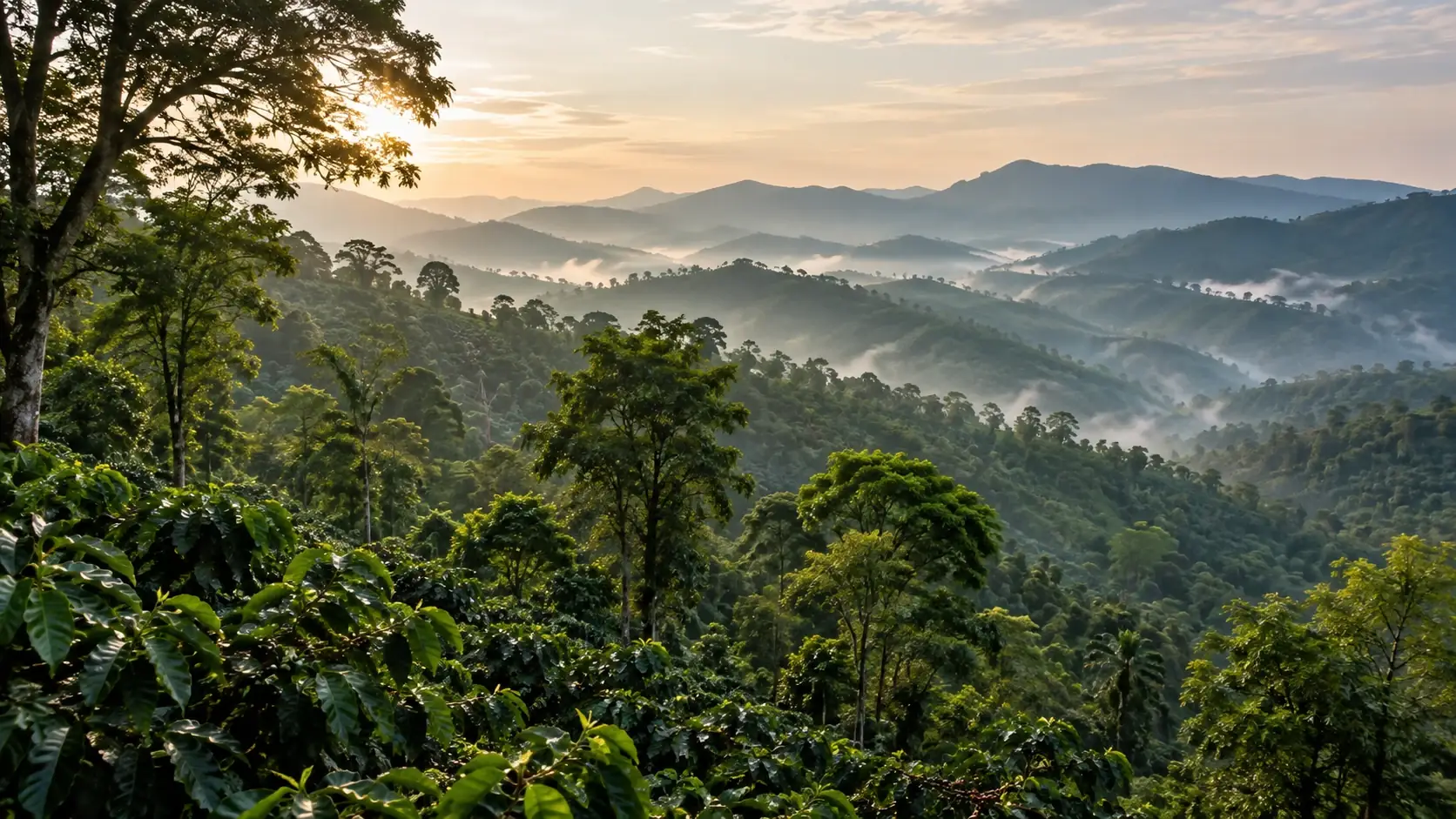 Karnataka
Where coffee grows helps explain its character. Explore five of India’s coffee origins, discover what makes each worth tasting, and carry your preferred region into your request.
Coorg and Chikmagalur grow both Arabica and Robusta, while the Baba Budangiri hills are closely linked to the beginnings of coffee cultivation in India.
Climate, elevation and growing conditions influence how coffee develops. Origin gives you context for comparing aroma, sweetness, acidity and body; variety, processing, roast and brewing complete the picture.
A region helps narrow your search. A named producer, harvest and process make the comparison more useful. Taste representative samples with the same recipe, then test your favourite in the drink you intend to serve.
Traceable origin lets you explain where a coffee comes from and recognise the people who grow it. Ask for evidence behind estate, geographical-indication or certification claims, and agree the details of the lot you are buying.
Regional descriptions are a guide to discovery, not guaranteed tasting notes. We confirm origin, availability and specifications for the lot proposed.
Choose a starting point and we'll carry it into your request. For experimental processing, single-estate or certified coffee, add it to the notes — availability and documents need confirming.
Bring a flavour brief, a market and a pack format. We work through blend, roast, grind, packaging and production with you. Feasibility, minimum order and timing are confirmed after review.
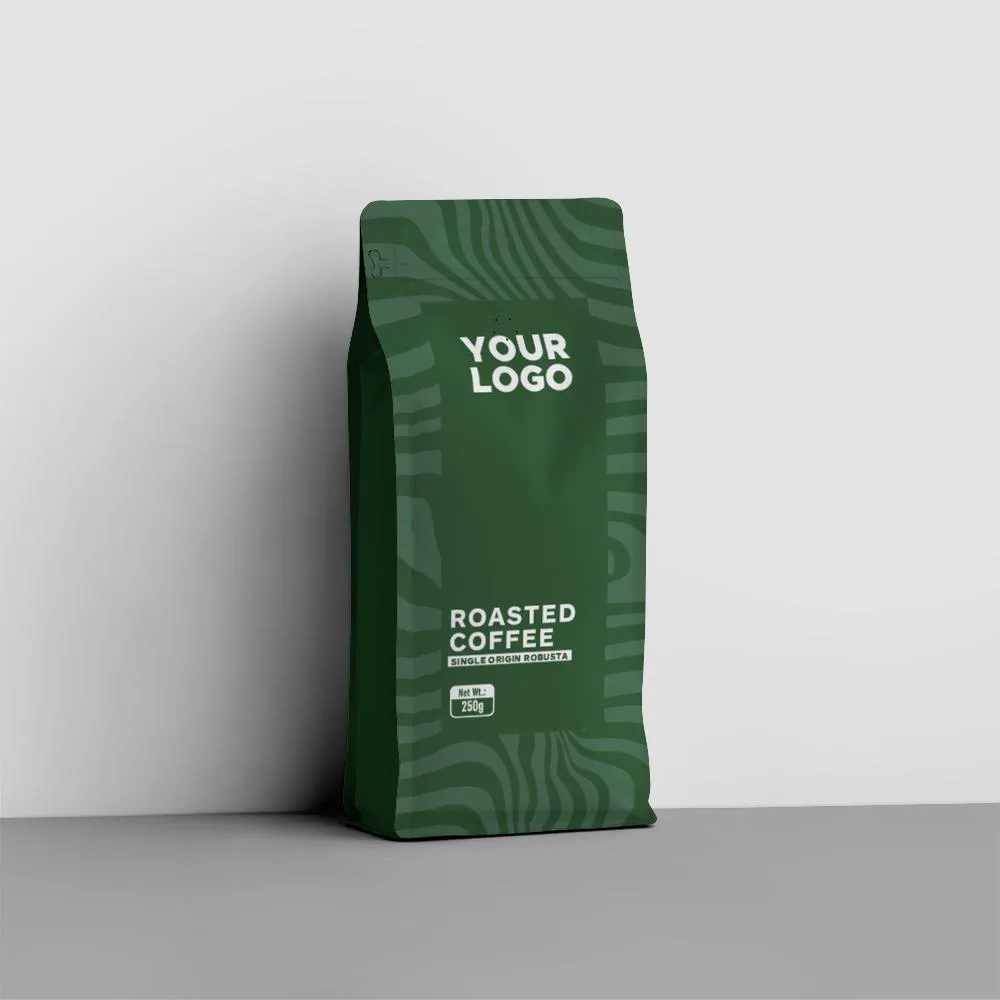
A 250 g pack for your blend. Your logo, coffee specification and pack format can be developed around your brand.
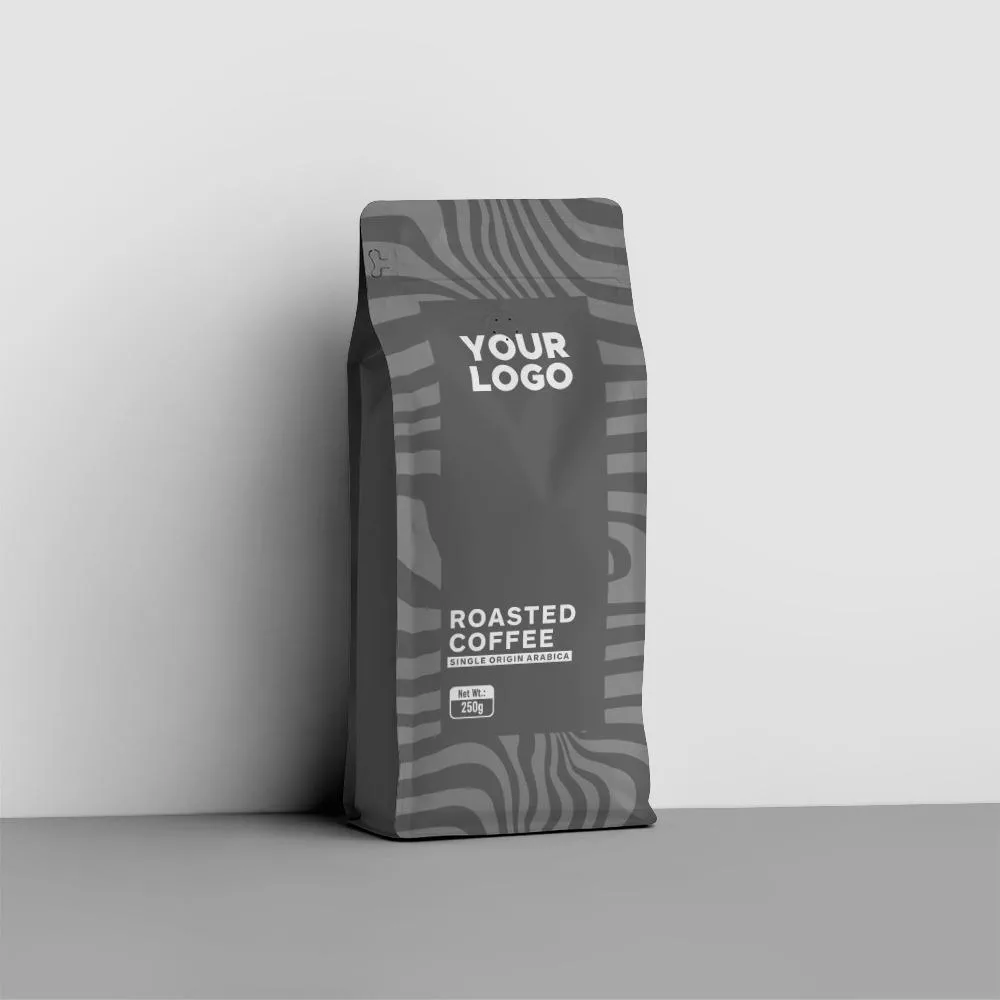
A complementary pack for a coordinated coffee range. Final artwork, materials and sizes are agreed for your market.
Answer what you know and skip what you don't. Everything you choose is carried into the brief our coffee team reads.
Send the coffee, quantity and destination you have in mind to our trade desk.
Email the trade desk Ask on WhatsAppExplore five Indian coffee origins. If you'd rather we recommend one, leave it open.
Green beans for your own roastery, or coffee we prepare for you.
Arabica and Robusta are different starting points, not better and worse. Compare samples on your own roast and brew.
Processing describes how the fruit is removed and the coffee dried. Ask for the actual process used on the lot you're quoted.
International freight is quoted per shipment. Minimum order, bag format and documents are agreed for each order.
Review your brief, then send it directly to our coffee team or continue on WhatsApp.
Yes. Request a representative sample and its lot reference. An offer sample helps you choose a coffee. If you need to approve the final milled lot, ask for a pre-shipment sample and agree on approval before dispatch. Include your delivery address so we can confirm sample size, courier cost and timing.
For Indian Arabica, Plantation means washed and Cherry means unwashed, or natural. PB stands for peaberry, a rounded bean sorted by shape. If a supplier offers a letter grade such as A, ask which screen size it represents. Compare the crop year, origin, measured moisture and defect count, then cup the sample to judge flavour.
Our minimums are 80 kg for green coffee, 60 kg for roasted whole beans and 80 kg for filter coffee. For other ground coffee or a private-label run, the minimum depends on your grind and pack size. If you want two grades or blends in one order, list the kilograms you need of each so we can confirm the split.
Allow 2 days to 2 weeks to prepare green coffee, and 6–21 days for roasted beans, ground coffee or filter blends. Private-label timing depends on the blend, pack and artwork approvals. These are preparation times. Give us your required arrival date so we can check the dispatch date and freight transit separately.
Send the coffee or grade, total kilograms, pack size and delivery PIN code. Ask for the price in rupees per kg and the order total, with packing, freight and any applicable GST shown separately. If you need the invoice in your business name, include your billing address and GSTIN if registered.
Tell us your machine, how you serve the coffee and roughly how many kilos you use each month. For South Indian filter coffee, include your preferred grind and coffee-to-chicory ratio. Try the sample with your usual recipe, then reference the approved blend and roast profile when you reorder. We’ll confirm availability and the next roast and dispatch dates.
Look for the delivery term and the named port or place. With FOB, the buyer arranges the main sea freight from the Indian loading port. With CIF, the seller pays sea freight and insurance to the named destination port. Ask which port charges, duties and inland delivery costs you’ll still need to budget for.
Start with the commercial invoice, packing list and transport document, such as the bill of lading for sea freight. The Coffee Board of India issues coffee export permits and ICO certificates of origin. Send your broker’s destination checklist before booking so we can confirm which documents, plant-health certificates or test reports apply to your shipment. Coffee Board export guidance
Bag weights, liners and shipping marks are agreed for each shipment. For a long or humid route, ask about a moisture-barrier liner. Give us the net weight your warehouse handles and the lot reference you want on each bag. On arrival, check the marks and bag count against the packing list and cup the coffee against your approved sample.
For samples, domestic supply or export enquiries, contact our team with your coffee, quantity and destination.